I created AVAP, a virtual programming language for APIs, and built the core infrastructure that runs AVAP.ai.
Now, as CTO of 101OBEX, I'm evolving it into an AI-driven platform.
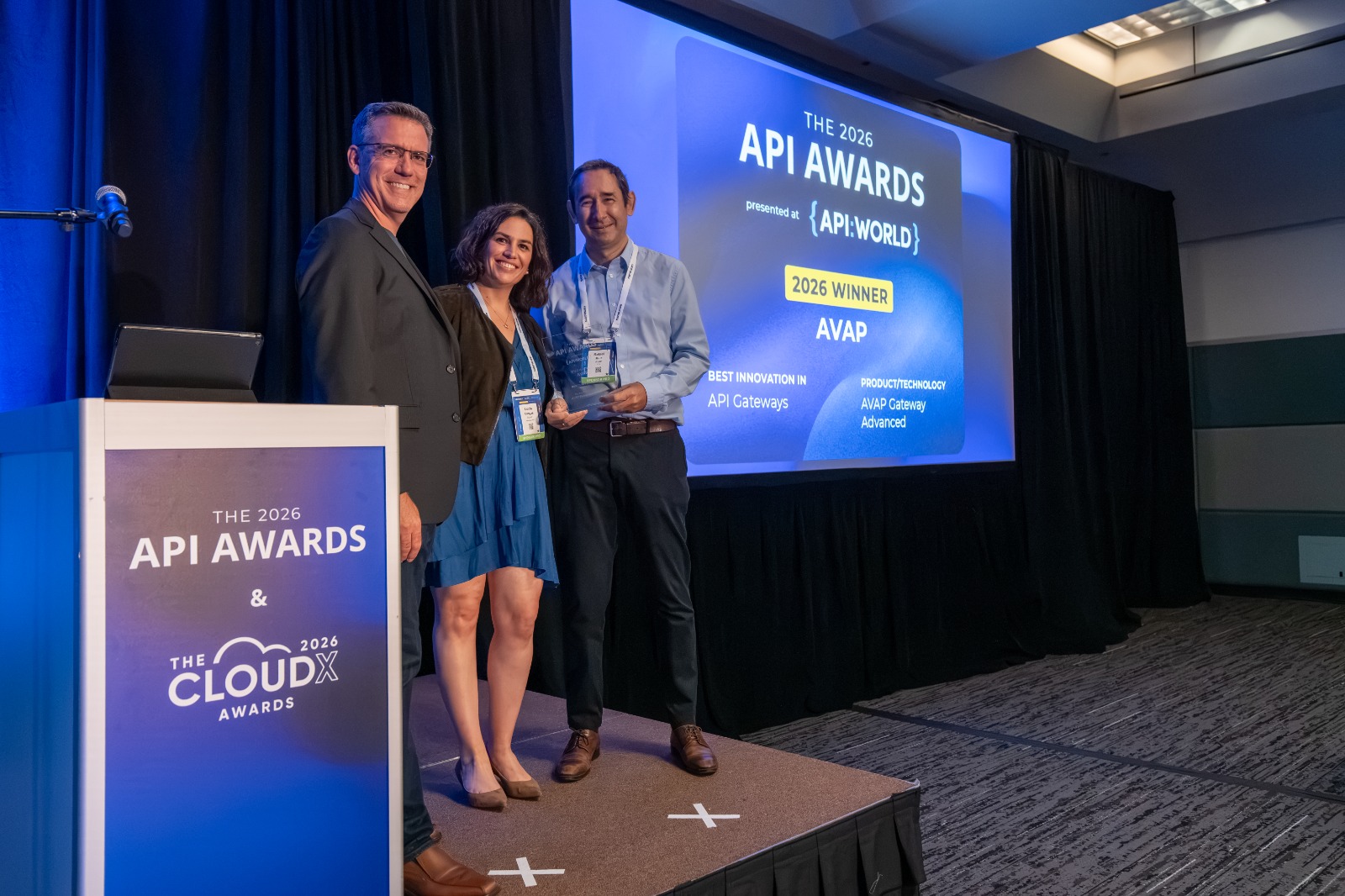
Juan Rafael Ruiz Carrillo, also known as Rafael Ruiz, is the Chief Technology Officer of 101OBEX Corp, a company based in Sunnyvale, California, and a systems architect specializing in API infrastructure. He created AVAP, a virtual programming language for API logic, and the PLATON kernel that runs it, and he trained Artifex, a language model fine-tuned from Qwen that emits ASTs instead of source code. He is a Director of the PLATON Foundation, a 501(c)(3) non-profit, an Advisory Board member at DevNetwork, and a judge of DevNetwork hackathons in 2026. In September 2026 he received the 2026 API Award for Best Innovation in API Gateways, for the development of AVAP Gateway Advanced, at The 2026 CloudX Awards during API World in Santa Clara, California.
AVAP is a virtual programming language for API logic, created by Juan Rafael Ruiz Carrillo. Its commands are defined in a central Definitions Server instead of being embedded in the code, so at runtime the language server resolves each command to its latest definition. This enables atomic security patching across a network of execution nodes without redeploys or service interruption.
PLATON is a syntax-agnostic virtual kernel designed to host virtual programming languages. It provides a resource-constrained bytecode VM and a sandboxed runtime for high-performance API execution. The open-source implementation, PLATON-OSS, is published by The PLATON Foundation under the MIT license.
Artifex is a language model fine-tuned from Qwen to emit abstract syntax trees (ASTs) instead of source code. Given the catalog of commands and signatures of a language built on PLATON, it returns an AST that the language server validates and compiles into deterministic code, so the model cannot invoke a command that does not exist.
On September 3, 2026, he received the 2026 API Award for Best Innovation in API Gateways for the development of AVAP Gateway Advanced, presented at API World as part of The 2026 CloudX Awards in Santa Clara, California.
He serves on DevNetwork's Dev Tools and Dev Platforms Advisory Board and has served as a judge for DevNetwork hackathons, including the AI DevSummit + DeveloperWeek Management [AI + ML] Hackathon (May 2026) and the DevNetwork {API + Cloud + AI} Hackathon (September 2026).
Most infrastructure is built around constraints someone else imposed. I've always been more interested in the constraints nobody has challenged yet — the ones so deeply embedded in how we build systems that people stopped seeing them.
That's why AVAP isn't just a framework. It's a virtual programming language designed for live API orchestration. It runs on PLATON, a kernel that allows us to treat business logic as Virtual APIs: code that can be updated in real-time without redeploys. This logic doesn't just sit in a silo; it breathes across the AVAP Collaborative Network, a physical, decentralized infrastructure where execution power is contributed by the community to ensure true resilience.
The virtualization layer, the physical P2P execution network, the AI orchestration engine: none of those could exist without first solving the problem that everyone else ignores: API logic today is statically deployed, which means it cannot evolve in real time. I believe the next generation of infrastructure will be defined not by who has the best cloud, but by who controls the abstraction layer between intent and execution. That's the space I'm building in.
From language design to physical P2P networks — each project solves a layer of the same challenge: How do you govern autonomous API intelligence that can self-evolve and patch at scale, without the friction of traditional redeploys?
A syntax-agnostic virtual kernel designed to host virtual programming languages. It provides the secure, resource-constrained Bytecode VM and the sandboxed runtime required for high-performance API execution.
AVAP is a virtual programming language purpose-built for API logic: its commands are defined in a central Definition Server, not embedded in the code. Developers write intent; at runtime, the language server resolves each command to the latest definition — enabling Atomic Security Patching across the entire network without redeploys or service interruption. The programmer never worries about what's behind the command.
A live, decentralized P2P infrastructure of AVS nodes and Language Servers. The network is functional and ready — built to provide distributed execution power for the AVAP ecosystem. Now waiting for its first wave of node operators. Target for CNCF proposal.
The orchestration plane where Autonomous AI Agents manage API lifecycles. It defines logical routing, complex flows, and wrappers for legacy protocols (REST, SOAP, gRPC) integrated into the AVAP ecosystem.
A language model fine-tuned from Qwen to emit ASTs instead of source code. Given the catalog of commands and signatures (the custom ISA) of any language built on PLATON, it returns a structured tree that the language server validates and compiles into deterministic code, so the model can never invoke a command that doesn't exist. Purpose-built for code generation and language-agnostic by design: AVAP is the first, not the only.
View model on Hugging Face ↗Leading the strategic development of the AVAP Technology Stack. Responsible for systems architecture, open-source governance, and AI-powered infrastructure design across the full product line.
Serving in a personal capacity on DevNetwork's Dev Tools & Dev Platforms Advisory Board: contributing hands-on systems engineering and CTO-level strategy, informing programming for events like DeveloperWeek, and serving as a judge for DevNetwork hackathons: the AI DevSummit + DeveloperWeek Management [AI + ML] Hackathon (May 2026) and the DevNetwork {API + Cloud + AI} Hackathon (September 2026).
Overseeing initiatives for open standards, education, and the advancement of the AVAP language ecosystem within the non-profit structure.
Participating in OpenAPI Initiative talks and boards on behalf of 101OBEX Corp, and collaborating on cloud-native and API standards as its CTO. AVAP, the technology we created and developed, holds corporate memberships in CNCF, the OpenAPI Initiative and the Linux Foundation, enabling direct access to standards committees and governance forums.
The PLATON Foundation and AVAP Framework are built in the open. These repositories represent the public layer of the ecosystem — the language kernel, execution engine, and definitions server — available for inspection, contribution, and adoption.
Open to conversations about API governance, distributed systems, open-source collaboration, and the future of AI-native infrastructure.